By Darlene Powell Garlington, Ph.D.
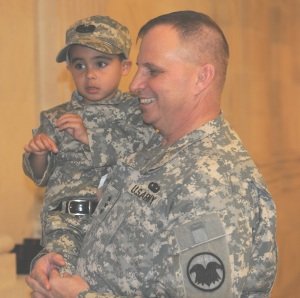 National Guard members and reservists face unique challenges balancing military service with civilian life. Unlike active duty members of the Armed Forces, they juggle the demands of both military and civilian jobs. Their families often live where there is less community support available to them than active duty military families who can share issues and concerns with people dealing with the same challenges. For instance, a child in an active duty military family with a parent deployed often has several friends with a deployed parent, whereas a reservist’s child may be the only one in his or her school with a parent who is deployed.
When deployed, guardsmen and reservists face the same combat and stress as other service members and can experience PTSD symptoms. However, the system of follow-up care and support for guard and reserve members when reintegrating back into their homes and communities after deployment is different, particularly when it comes to psychological health benefits. TRICARE benefits end soon after they return from active duty. This and other barriers to care can make guard and reserve members more susceptible to experiencing adjustment issues, in turn making them more susceptible to mental health issues.
Therefore, preventive measures focusing on strength and resiliency are even more critical. Aside from interventions in theater that focus on addressing stress, leaders should also help guardsmen and reservists think about how to reintegrate into civilian and family life after deployment. Families can take some steps to prepare for post-deployment stress, too.
Although all areas of fitness are important, possible psychological effects from the trauma of combat are important to address, as well. Two major factors that promote preventive and protective measures for guard members and reservists are social/civilian support systems and family strengthening. We need to be sure that family, employers, and the general public have at least some understanding of military culture and the deployment cycle.
The importance of positive family dynamics that include all members feeling supported and secure cannot be overemphasized. There are a lot of military resources available for families. While there can be additional challenges for reservist and guard children, there are many resources available to them, as well. There are camps created specifically for them to help them cope with their feelings, and adjust to the stress of their parent’s deployment.
Children are resilient and can persevere through challenges when the family lines of communication are open and genuine. Guard and reserve families need to maintain social supports during deployments.
Extended family, employers and friends should be encouraged to incorporate strength-building messages in letters, care packages and any other communication with guard and reserve members and their families. These messages will indicate a sense of connectedness, loyalty, empathy and trust that those at home “have your back,” and can go a long way in strengthening the resilience of those deployed.
DCoE has health resource consultants available 24/7 at the DCoE Outreach Center, who can provide useful information and resources on psychological health. The site also provides resources specific to the National Guard and Reserve members. The center can be reached by phone at 1-866-966-1020 or chat live online at www.dcoe.health.mil/24-7help.aspx.
If you think you are experiencing any symptoms that you think may be mental health-related, you can take a free, anonymous screening.
Darlene Powell Garlington, PhD, is a licensed clinical psychologist, certified school psychologist and media psychologist who specializes in providing services to the military. She is a Senior Policy Analyst at Altarum Institute, consulting for DCoE. She is the author of eight books on a range of topics including parenting, psychology and spirituality.
